


“What is—it already was, and what will be—it already is, for God will do what he has done.” Ecclesiastes 3:15 (LEB)
I’m hardly the first to note that Hollywood has a nostalgia problem. We are as inundated with complaints about unnecessary sequels, remakes, and reboots as we are inundated with unnecessary sequels, remakes, and reboots. Ever-attuned to the heartbeat of American pop culture, South Park season 20 explored this phenomenon via a plotline centered around “Member Berries,” cute little clusters of talking grapes espousing nostalgic longing, calling out to each other in high-pitched voices with “member insert classic pop culture reference here” and responding “oh I member!” Randy, one of the show’s more offbeat protagonists, is first introduced to them under the premise that their wistful yearning for better days “really takes the edge off.” The townsfolk spend the season ingesting them like a daze-inducing drug.
While a bit on the nose, the drug parallel is an apt analogy. Not unlike opioid addiction, nostalgia is the act of chasing an original high you can never reclaim. That first childhood experience of drinking Capri-Sun after a commercial told you how cool it was, or watching Star Wars, or Goonies, or any of the other classics the Member Berries long for, never hits as hard as the first high, nor can the innocence of youth in which that experience is contextualized be replicated. The best we can do is pursue a taste of it, bask in the fuzzy memories, try to close our fists around vapor.
“Grasp at echoes,” you could even say.
The live-action Disney remakes are probably the best example of this. These films are made not only as returns to familiar stories but in meta-conversation with their previous incarnations. From in-jokes that only work if one is familiar with the original to outright critiques of their classical counterparts, these movies tend to, unfortunately, care more about their perception of themselves than the story they are supposedly trying to tell. And yet, despite all the weary complaints of film critics and internet movie lovers who are sick to death of this pattern, the box office says this is what the people want. The live-action Lion King remake earned more than 1.6 BILLION dollars and, at the time of writing, sits in the top 10 highest-grossing films of all time.
The reason for this, I think, is pretty simple. People aren’t there for the movie, people are there for the Member Berries. People are there to point at the screen in recognition of familiar moments and be awash in nostalgia's intangibly evasive fuzziness.
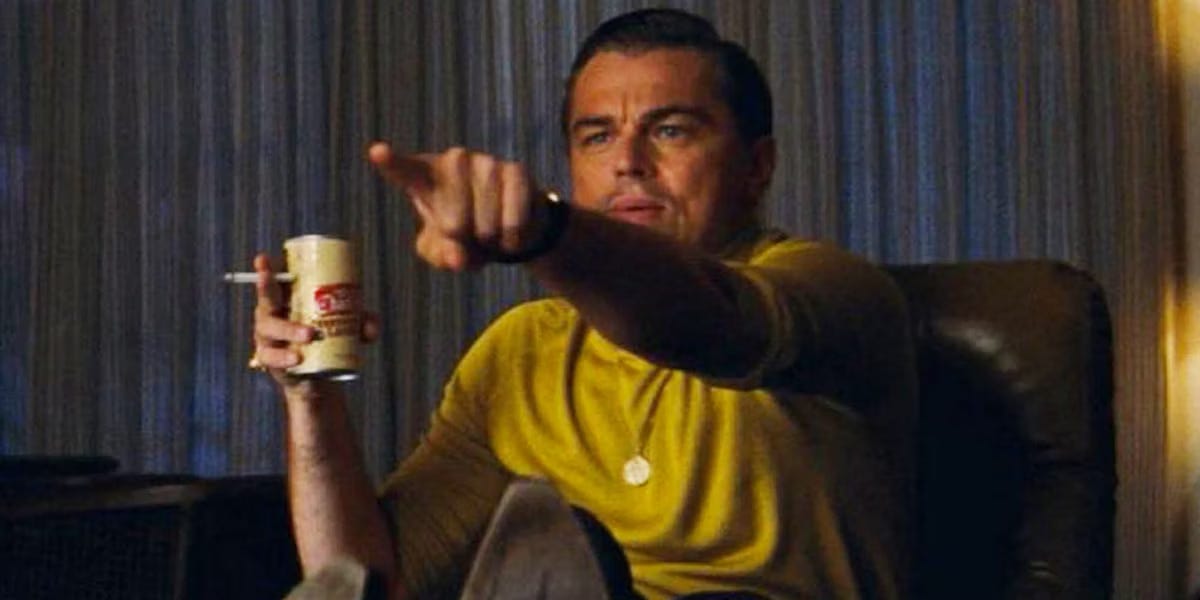
But what they long for isn’t the movie or even the original experience of the movie— it’s the idealized memory of it. Nostalgia in its most potent form is a distortion of happy recollection; it takes the reductionist simplicity afforded by memory and tells you that’s the totality of the picture. It doesn’t just make you long for a simpler time, it convinces you that time really was simpler. In other words— through careless nostalgic recollection, our pasts can become mythologized.
This inclination to idealize the past seems to be an almost inherent human trait. We can trace it at a micro level through the aforementioned childhood memories or at a macro level through our cultural history, from the pervasive fiction of the lost cause mythos treacherously influencing Americans’ perception of the Civil War to the idealized portraits of our Founding Fathers. How many of us come away from childhood with a folkloric perception of these men, seeing them as nothing more complicated than paragons stalwartly fighting for freedom and heroically overthrowing tyranny as a united front?1 Of all things, it was Lin-Manuel Miranda’s Broadway smash-hit Hamilton that woke the general public up to the fact that many of these men actually hated each other. The musical illustrated (in the catchiest way possible) how our country was formed less from the consensus of like-minded ideologues and more from the strenuous compromise of bitter rivals.
As a Christian, perhaps the most salient example of this phenomenon is the Davidic monarchy. Read the later Jewish prophets, the 2nd Temple literature, even aspects of the New Testament and see a longing for a restoration of the united tribes, a wistful remembrance of a good old days when Israel and Judah walked safely in the shadow of David’s palace, the God-ordained King justly governing a peaceful land…
…and then go read Samuel/Kings and see what a romanticized fiction that is. From the start, the monarchy is presented as folly. God himself claims that Israel’s demand for a monarch is a rejection of his rule as their King.2 God tells them exactly how their king will oppress them, abuse his authority, and bring ruin to their nation, and that when they cry out for relief from these things, he will not answer, for they knew what they were doing and brought it upon themselves.
What a pertinent lesson for our own context, even more applicable in a democracy. When electoral consequences bear out, let no one claim ignorance, for we brought it upon ourselves. The echo of a three-thousand-year-old mistake resonates just as clearly today: “No!” they said, “We are determined to have a king over us!”
The people of Israel ignore the warning, demand a king, and all God warned about comes to pass, culminating in the bifurcation of Israel and Judah back into their composite division and the eventual destruction of both kingdoms. And yet, even with that history known, even with the folly of those kings preserved, the Davidic monarchy quickly becomes apotheosized. Look no further than the book(s) of Chronicles, recounting virtually the same story as the Samuel/Kings narrative a few centuries later, yet smoothing over the rough edges. Gone is David’s rape of Bathsheba and murder of her husband, gone is the strife between Saul’s house and David’s, gone is Absolom’s plot against his father, gone in fact is that entire succession crisis!
It’s nothing short of ironic that in the Christian ordering of the Old Testament, Samuel/Kings are immediately followed by 1 and 2 Chronicles. Reading them back to back could be likened to watching the original Lion King immediately followed by the remake, the transition from history to anamnesis gone in the turn of a page rather than the lengthy, reflective path that actually leads from one to the other.3
Even in the New Testament, we see this phenomenon. The glamorized cooperation and agreement between Peter, Paul, and James as seen in Acts hardly accords with Paul’s own telling of things in his letters. Much like the American Founding Fathers, the nonpareil aspirations of the lasting institution color the remembrance of the flawed men who built it. Even today, looking back upon the “Great Church” of the first few centuries, we tend to forget that the diversity of belief in those early days was as varied and cantankerous as any denominational tension down the ages, imagining it was uniform in belief instead of merely unified in conviction.4
Politicians promise us a return to a time when our country was great. Movie trailers exhibit familiar settings and beloved actors returning to the franchises of yesteryear that raised us. Religious leaders fire us up for a return to the glory days of imperial Christendom or to partake in the latest revival, always with the assurance that YOU can be an essential part of the big new thing God is doing (that of course, usually just happens to correspond with earthly wealth or the acquisition of political power).
All of these hollow pledges promise you a fiction. The good old days are not coming back, because they never existed to begin with. Even the greatest days of our past were as fraught with anxiety as our present moment and if our species didn’t so stubbornly refuse to learn from history, maybe we’d stop repeating it.
As an ardent creator and avid consumer of fiction, I understand its allure better than most. Fantasy’s power to entice is rarely matched by reality. But when we fail to delineate between the two and allow our expectations of real life to be set by fantastical promises, all we do is cultivate the discontent that got us here to begin with.

This entire discursive essay is nothing but a blathering expression of the sentiment “lies are bad.” Which should go without saying, but unfortunately, we’re in the midst of a communication revolution the likes of which our species has never experienced. Lies have never been more accessible or powerful. We’ve so successfully computerized our world that a lie told digitally now has the power to manifest an actual change to reality. We no longer disagree with our neighbor about the efficacy of policies or the emphasis of particular morals, we occupy ontologically different realities. If I can look at an apple and call it red, and my neighbor can look at that same apple and assure me it’s blue, we can no longer disagree because we can no longer communicate at all.
Weaponized nostalgia plays a malignant role in nurturing this division and it’s so difficult to identify as sinister because we’re so used to being innocently immersed in its daze. Sure, we understand the capitalistic exploitation of remaking a childhood classic, but there’s no real harm in that, right? Member Berries just take the edge off, don’t they?
In South Park’s Season 20 premiere, Randy is lying on his couch, a cluster of Member Berries in his hands, piping out their usual catchphrases:
“Member Star Wars?” “Oh I member!” “Member Bionic Man?”
Randy sleepily reaches for one of the berries, contentedly confirming that he, too, members, when one of the berries suddenly says, in the same rueful tone: “Member when there weren’t so many Mexicans? Member feeling safe?”
South Park, with its usual absurdist perspicuity, perfectly illustrates the danger of our present moment: nostalgia is a Trojan Horse. Propagandistic promises of a return to the good old days trigger the same sensors as the allure of childhood nostalgia. That reminiscent fuzziness immunizes you to the nuance of the past, highlighting only the good things you member and, in doing so, slips in false hope for a reinstatement of that fictional status quo, a promised return you to a place you’ve never been.
A good old daze, if you will.
Soulless Hollywood remakes are a (mostly innocuous) reflection of a much more cancerous rot eating away at the soul of society. The hubristic attempt to conform our future to a past that never existed is a recipe for destruction. When we promise untruths, we promise nothing. When we accede reality to convenient lies, we ground our reality in nothing. Nothing is the opposite of God, the antithesis of the great I AM; to replace truth with lies is to un-make ourselves, and to place our hope in false promises that placate our selfish inclinations is to foster damnation. When we promise to make things great again, just like they were in the good old days that never existed, we are saying nothing at all.
This isn’t the fault of one ideology or political party; this is an ancient human folly, rebooted for the digital age. This is Babel, humans trying to build our own way to the Heavens, triumph founded on our own ingenuity and manifesting our own glory. The cockalorum charlatans who bestow the title of “Prophet” or “Apostle” on themselves only to worship at the altar of materialism and sycophantically champion rapists (both amongst their own ranks and in government) are the prophets decried in the appropriately cacophonous condemnations of Jeremiah 23. The fictitious, ubiquitous, earthly paradise promised to us in terms of fantastical progress arriving at a future utopia or a Member-Berry-fueled haze of nostalgic good old days is nothing more than the latest seductive iteration of Babylon the Great.
“No,” we cry against the witness of history, “We are determined to have a king over us!”
There is nothing new under the sun.
Not to mention the downright religious reverence with which we venerate our founding documents and to this day judge our systems by the metric of how we imagine they’d align with the founders’ intentions. Only the most radical fringe Baptists would go so far as to call our Constitution divinely “inspired,” but we all sure do treat it like it is.
1 Samuel 10:7
The Jewish ordering of the Hebrew Bible places 1 and 2 Chronicles at the very end of the collection, which in my humble opinion makes much more sense.
Not to say that the vision of a more united church (in some sense) is completely unfounded, there certainly were fewer dogmatic lines drawn, though this is less due to an ecumenical spirit and more due to how fledgling the early church was. Even as the institution grew in prominence, it lacked centralized power for many years. That being said, there was plenty of doctrinal diversity; the Nicene standard of Christian orthodoxy was more than the winning faction (as some reductionistically characterise it to be), but also less than inevitable.