In 2018, director Morgan Neville brought us Won’t You Be My Neighbor, a documentary chronicling the life and career of Fred Rogers. At the time of its release, I worked part-time at the Manor Theater in Squirrel Hill, one block away from Sixth Presbyterian Church (cherished by locals as a place that Mr. Rogers would frequently attend), and just a few miles away from the WQED building where he filmed his television program (my far less child-friendly film “Sailor Jack” was filmed in the same studio).
Given the Manor’s proximity to Mr. Roger’s Neighborhood, it surprised no one when, on the opening night of the documentary, who should come through the door but Joanne Rogers, all kind smiles and affable embraces of the many who recognized her and rushed to shake her hand. I was one of those many. I remember stories from my mother, uncle, and others about crossing paths with Mr. Rogers, but I never had the privilege, so I was not going to miss the opportunity to greet Mrs. Rogers. I approached her under the pretense of my role at the theater, planning on welcoming her and offering a conventional “if there’s anything you need…” but when I found myself in front of her, I think the only words that came out of my mouth were an imprecise “thank you.” I’ve never been one for celebrity heroes or being starstruck, but Mr. Rogers is a figure that goes beyond celebrity; he was a teacher, a pastor, a welcome friend and neighbor in countless households to children like myself who grew up with him regularly in our living room. Celebrity is too small a category for such a man and his wife perpetuated the same aura. Joanne was clearly used to grown men like myself melting in her presence and did what I imagine her husband would have done in the same scenario: looked me right in the eye, heartily shook my hand, and spoke kindly to me for a moment in a way that made me feel like we were the only two people in the lobby. Mrs. Rogers truly was Mrs. Rogers.
I closed the doors to the packed auditorium and watched a couple smile politely at Mrs. Rogers as she sat down, but they evidently did not recognize her. I remember remarking to my co-workers that I would pay any amount of money to see their faces a few minutes into the movie when she popped up on screen and they realized who they were sitting next to.
I’ve frequently seen, usually in meme format, plenty of opinions about how Jesus would be received were he to embark upon his ministry today. Usually, this is thrown accusatorily; liberals telling conservatives that they would be like the Sadducees and call him a woke hippie, conservatives telling liberals that they would be like the Pharisees and cancel him. But the truth is, we don’t need to deal with hypotheticals because Fred Rogers may be the closest thing to Jesus we will ever see in a public figure. This was a man who exemplified the posture of Christ to a radical degree, whose kindness was unrelenting, whose love for the weak and the marginalized was never sidelined by politics or ambition, and who actually managed to exemplify what living with childlike wonder late in life looks like. A more Matthew 18:3 Christian has perhaps never lived, much less made TV.
Mr. Rogers was also a contemplative. As an ordained Presbyterian, I doubt he would have employed the classical language of the hesychasts or utilized lectio divina in his morning prayer, but the man was a zealous advocate for the importance of silence. He frequently bemoaned the noise of the world, lamented that “Our society is much more interested in information than wonder, in noise rather than silence,” and famously would use his public speaking appearances as an opportunity to pause and encourage huge crowds to simply sit in silence and reflect. You have all probably seen clips of this, but I prefer the description by Tom Junod in the greatest magazine profile ever written:
“Yes, at seventy years old and 143 pounds, Mister Rogers still fights, and indeed, early this year, when television handed him its highest honor, he responded by telling television—gently, of course—to just shut up for once, and television listened. He had already won his third Daytime Emmy, and now he went onstage to accept Emmy's Lifetime Achievement Award, and there, in front of all the soap-opera stars and talkshow sinceratrons, in front of all the jutting man-tanned jaws and jutting saltwater bosoms, he made his small bow and said into the microphone, ‘All of us have special ones who have loved us into being. Would you just take, along with me, ten seconds to think of the people who have helped you become who you are….Ten seconds of silence.’ And then he lifted his wrist, and looked at the audience, and looked at his watch, and said softly, ‘I'll watch the time,’ and there was, at first, a small whoop from the crowd, a giddy, strangled hiccup of laughter, as people realized that he wasn't kidding, that Mister Rogers was not some convenient eunuch but rather a man, an authority figure who actually expected them to do what he asked…and so they did. One second, two seconds, three seconds…and now the jaws clenched, and the bosoms heaved, and the mascara ran, and the tears fell upon the beglittered gathering like rain leaking down a crystal chandelier, and Mister Rogers finally looked up from his watch and said, ‘May God be with you’ to all his vanquished children.”
It’s an embarrassing understatement to say we live in polarized times. We also live in unprecedented times. Never before has our country seen an administration like our current one, bent utterly on the destruction of democratic norms, the consolidation of executive power, or with the ability to spread misinformation as ubiquitously as Twitter enables. And while we’ve had bad presidents and corrupt presidents and useless presidents throughout our country’s short history, I’m not sure we’ve ever had, at least in modern times, a president who revels in such abject cruelty.1 It sounds almost childlike to say,2 but our politics really have made us meaner. Gone is the tense but respectful balance of viewing one’s political opponents as valid but mistaken, this administration has no shortage of childish nicknames for its detractors and no compunction about labeling even the slightest of critics as evil or stupid. The impetuous demolition of international relations is dismissed as mere trolling, cultivating nazi kinesics is seen as based and hilarious for owning the snowflake libs, and the official White House Twitter account even mockingly posted “Deportation ASMR,” so that the American public could mingily revel in this supposed victory. The week and a half which passed between me writing that sentence and this one provided almost daily examples of infantile inclemency and ingratiating buffoonery all in the half-joking-but-not-really style of the maniacs denounced in Proverbs 26:18-19.3 We can go back and forth about who started this dehumanizing trend of sycophantic adversity, but there is no doubt which side has mastered it as a winning strategy.
If it were just politics, I don’t think it would bother me. Patriotism has always been a secondary impulse at best for me and the more seriously I’ve taken my faith over the last decade, the more those already undeveloped patriotic muscles have atrophied. What incenses me is the Christianity of it all, the fact that the public champions of our faith in the mainstream are virtue signaling politicians preaching family values while fathering half a dozen children with as many mistresses, preaching in defense of “life” while cheering on the destruction of social safety nets, and fear-mongering about the coming antichrist leading a mythical one-world-government while championing literal techno-fascists.
But as bleak as the complete undermining of our country’s institutions and values is, it’s also not the first time we’ve faced intense division or calamity on the homefront. We’ve seen economic turmoil and geopolitical anxiety during the Great Depression or both World Wars, protests and cultural upheaval during the Vietnam War and Civil Rights movements, polarization as harsh and consequential as the American Civil War and as silly and insignificant as whether or not Pokemon is demonic. While particular woes may be unprecedented, it’s simply the bias of our own perspective to view our time as uniquely desperate. Things may be bad (and in so many ways they are) but the majority of humanity has lived in and through such times.
So WWMRD? Again, there’s no need for hypotheticals. We have his advice for times such as these:
“When I was a boy and I would see scary things in the news, my mother would say to me, ‘Look for the helpers. You will always find people who are helping.’”
And he’s right. Amidst all the chaos, all the anxiety-inducing headlines, all the wanton celebration of fatuous bullying that makes people like me who’ve lived too much of our life online want to post furious status updates, there are people not making those headlines because they are helping. I’ve been especially inspired by my Church community’s response to the changes in immigration policy. As resettlement agencies lose their funding and immigrants are unduly demonized, there are groups quietly organizing, gathering what resources they can, and doing their best to help those already here.
I don’t know how to respond to what’s happening right now. Neither do I want to focus on it, but everything I write lately veers toward the disarray of the present moment. I’m not lauding Fred Rogers today out of some kumbaya spirit of “why can’t we be friends,” he’s been on my mind because Fred Rogers was an insane radical. He read the words of Christ and just did it, to a degree that strikes most of us as categorically not an option. Mr. Rogers is on my mind because I think the most extremist act of rebellion we could undertake right now is exemplifying his gentleness. The dominant Christian movement of our age is one that looks nothing like Christ and everything like Rome, that wants to build a culture of domination and hierarchy, that wants to subjugate and demean its enemies instead of love them, that wants to put us and the US first no matter who gets left out in the cold, that considers humanitarian aid “wasteful spending,” that thinks the ends justify any means, and that has sold its soul to the most virulently un-Christlike human being of the present age. And all of that makes me want to fight. I want to get on here every day and levy as many admonitions and pejoratives at these charlatans as a thesaurus can provide. I want to degrade and embarrass these propaganda-glucking hypocrites and expose them for the vacuous morons they are. I want to subjugate and demean my enemies instead of love them.
And there it is. Logs and specks.
Spiritually, meeting this vitriol in-kind too often is impoverishing. It’s the natural response, of course, but Christ commands us to oppose the natural inclinations of eye for an eye. I think on my best days my anger is righteous, but that doesn’t sap its potential for self-destructiveness. I won’t be able to out-shout these people, they are literally the best at shouting. But the real response, the better approach, is so much harder. Fred Rogers is a needed and difficult reminder that gentleness is an achievable form of combat, that kindness is a formidable weapon in the culture war, that those and the other listed fruits of the Spirit aren’t just empty sentiment but an aspirational standard. Fred Rogers made sense of the wisdom that is foolishness to the world, embodying the love of Christ and the wisdom of men like Seraphim of Sarov, who said:
“Acquire a peaceful spirit, and around you thousands will be saved.”
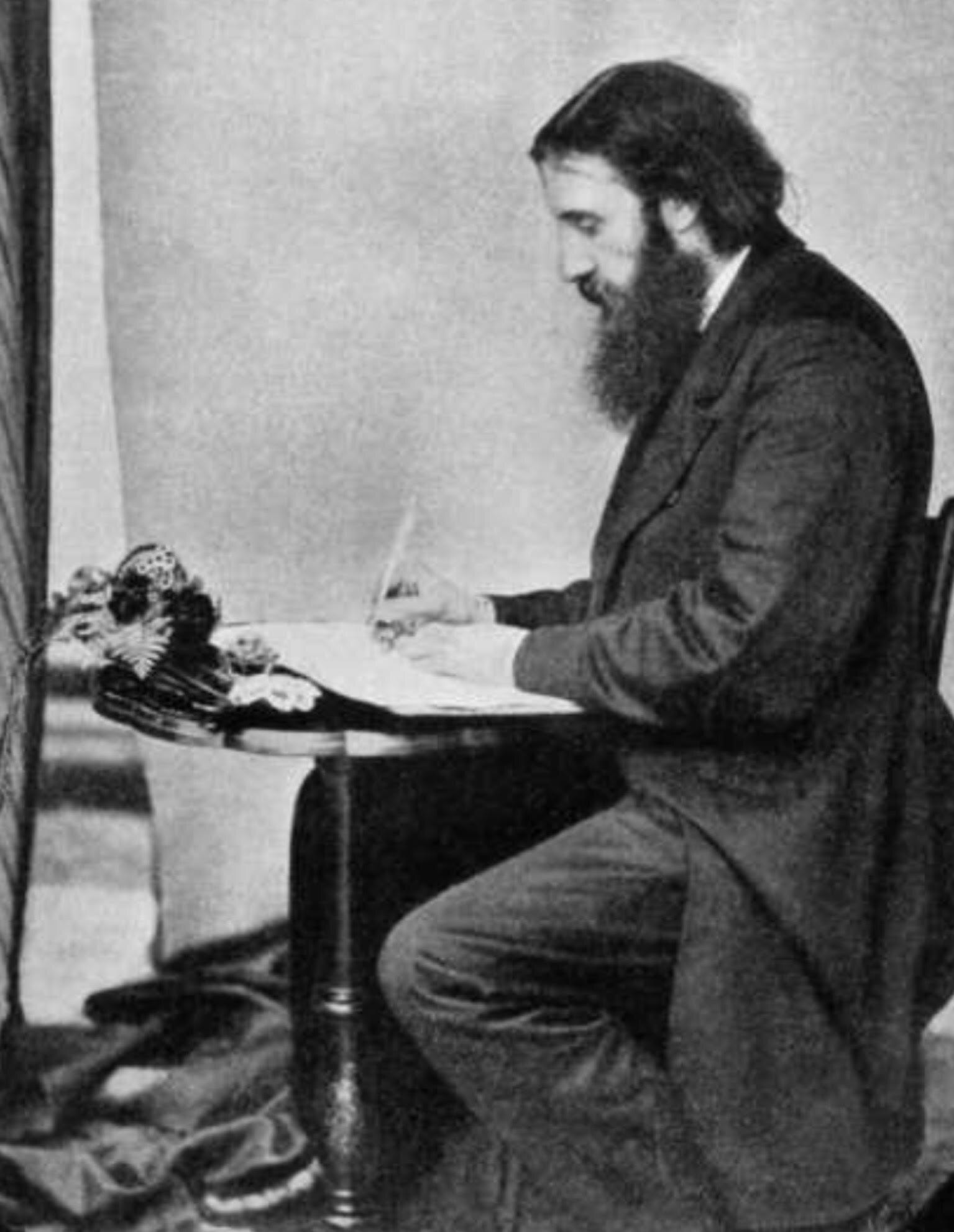
George Macdonald, no stranger to the occasional verbal barb or impassioned plea for moral sagacity, also knew that the top-down impositions of morality we so easily gravitate towards never work. As he puts it in Sir Gibbie:
“To try too hard to make people good, is one way to make them worse; that the only way to make them good is to be good—remembering well the beam and the mote; that the time for speaking comes rarely, the time for being never departs.
Acquire a peaceful spirit to save those around you. Make people good by being good. These sound like such naive aspirations but we have such compelling evidence that they work. Look at Fred Rogers, a man who on the one hand, stood on the cutting edge of technology, recognizing television as the media of the future and staking out a stronghold in the space for the betterment of children who would be watching TV regardless, while on the other hand, resisting the trends of modernization and staunchly refusing to acquiesce to fast-paced entertainment as the industry discovered there was more money in distracting children than teaching them. But through his entire entertainment career, all he did was follow that advice— acquire a peaceful spirit and be good. He spent his life loving his neighbor quietly, ardently, and consistently, and we can all see its impact on the world. Look back to those first Christians, who carved out their reputation by being the ones going in to help the lepers and the plague-ridden, who met their unjust deaths with songs of praise, thankful to imitate the model of their kenotic saviour. In just a few hundred years, they went from an unheard-of minority to the faith of the empire, not by conquest or compromise, but by practicing what they preached.4
I know exactly how tempting it is to believe this hippie-sounding approach is feeble or ineffective for the modern era. I think back to an incident in 2021, where Russell Moore shared his alarm at congregants confronting him over a “turn the other cheek” sermon, asking where he got those “liberal talking points.” When he attempted to inform said congregants that it was simply the literal words of Jesus, they replied, “Yes, but that doesn’t work anymore. That’s weak.” My suspicion is Mr. Rogers, without the dreamy lens of nostalgia elevating him in our minds, would be viewed today as similarly weak. His stalwart brand of gentleness would be seen as, at best, naive.5 I imagine the same was thought of Christ’s teachings in the face of Roman persecution. The spirit of surrender, the willingness to not resist an evildoer, sometimes seems impossible to achieve. But in the digital age, so does ten seconds of silence.
Everyone knows the story of Fred Rogers going before congress and singlehandedly saving funding for public broadcasting by asking nicely. Watching him do so, his quiet sincerity, his earnest seriousness, his gentle fortitude, is entrancing. It’s the kind of integrity that can’t be faked; a commanding presence that cannot be emulated via performativity, because to watch Fred Rogers is to observe a peaceful spirit saving thousands around him.
To borrow phrasing from a song Mr. Rogers brings up in that Senate hearing, I don’t always know what to do with the mad that I feel. I know I’m called to be more like Mr. Rogers and less like President Trump. But I also know we live in a world where most of the time, President Trump wins and Mr. Rogers gets made fun of and the funding gets cut and most kids grow up watching the fast-paced, pandering cartoons of Mr. Rogers’ nightmares rather than the patient, ethereal pedagogy of the Neighborhood of Make-Believe. I’m called to rejoice in a losing battle with the only comfort offered being a promise that someday, all shall be well. I’m not always man enough for that calling.
Which is why we (alleged) grown-ups should look back to Mr. Rogers. In a time bereft of good male role models, young men will naturally gravitate to the types encouraging them to embrace feeling big and powerful and comically masculine, rather than the much more difficult call to be like Christ. Fred Rogers modeled what Christlike living looks like and role-models aren’t just for kids.
“The time for speaking comes rarely, the time for being never departs.”
May God help me to shut up and be.
Grasping at Echoes is a reader-supported publication. To receive new posts and support my work, consider becoming a free or paid subscriber.
The AI-generated “Trump Gaza” song with accompanying imagery depicting our president as a literal golden statue erected amidst the newly gentrified Gaza Strip being an especially notable contender for the list, though an hour before time of writing Trump (and even moreso his servile minion of a Vice President) gave us one of the most peurile displays of vacuous bluster imaginable, and given his track record that’s saying something.
And then look how rotten things got when they began to compromise with the empire in service of becoming a state religion. There is nothing new under the sun…
I phrase it as a suspicion purely as an attempt at charity, I know he would be viewed as such. Even in 2007 you had Fox News hosts maligning him as an “evil man” for promoting weak liberal entitlement amongst children.







Thanks Ben. I’m thankful my kids watched him. I wish my grandkids could.
So well said.